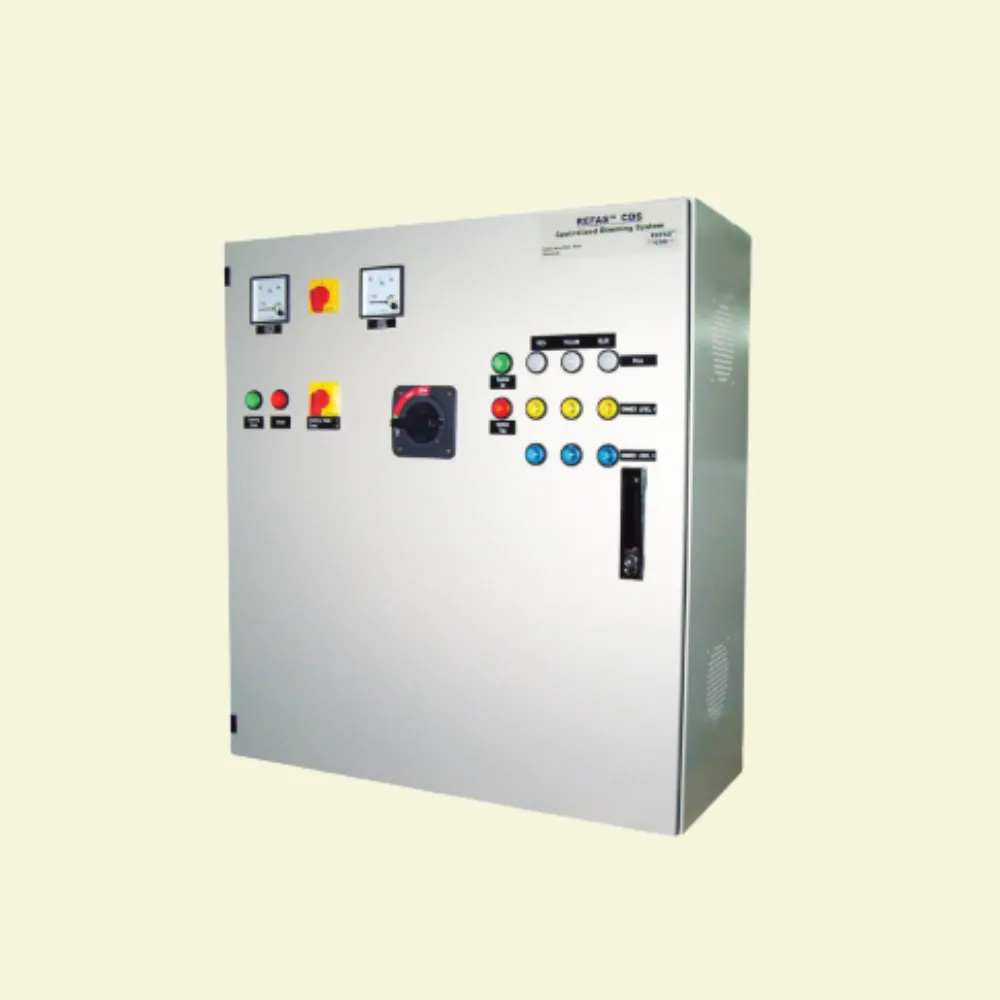
A locally manufactured energy saving product with Europe technology, suitable for street lighting, compound lighting, façade lighting and indoor lighting applications.
REFAS Centralized Dimming System (CDS) provides the flexibility to control the light dimming levels and energy consumption hence achieving maximum energy saving and reducing electricity cost. Our CDS is design and manufactured for local tropical environment with robust components.
REFAS CDS is suitable for outdoor installations that are subjected to unpredictable lightning surges throughout the year.
Our CDS units are very maintenance friendly, as it is manufactured using components that are easily available in the market. Furthermore, we can provide on-site training to customers on the proper method of maintenance for the CDS units which are simple and require minimum supervision.
The initial investment cost of our CDS is much lower when compared to the other electronic system available in the market and therefore the payback period for our product is much shorter.
Based on the energy saving of 20-25%, a typical road or highway project can expect a return on investment (ROI) of around 2.5 - 3.5 years.
Characteristic
Fire Hazard prevention by usage of Fire Resistant cables
Flexible and Ease of Change to Setting Modes
Common Components used for Ease of Maintenance.
Reduction in Energy Consumption
Tropicalized Design
Robust without any sensitive Electronic Components
Built-in Electrical Protection
Specifications
All external compound/street/flood/path lightings shall be provided with time switches with battery/spring reserve and manual bypass or by other appropriate method for manual switching.
The lighting systems shall be of such design so that at the desired time the lighting level can be reduced if required.
The lighting systems shall be controlled by three (3) preset levels, e.g. Full Output (100%), Dimming Level L1 and Dimming Level L2.
A dual dimming switching system, controlled by time switches shall be incorporated for the dimming of the lighting systems for the period during the desired time of the night until the next morning.
The dimming system should be tropicalized without having any electronic control components and circuits in the design.
The system shall not impose any significant change of power factor or increase in harmonic component levels.